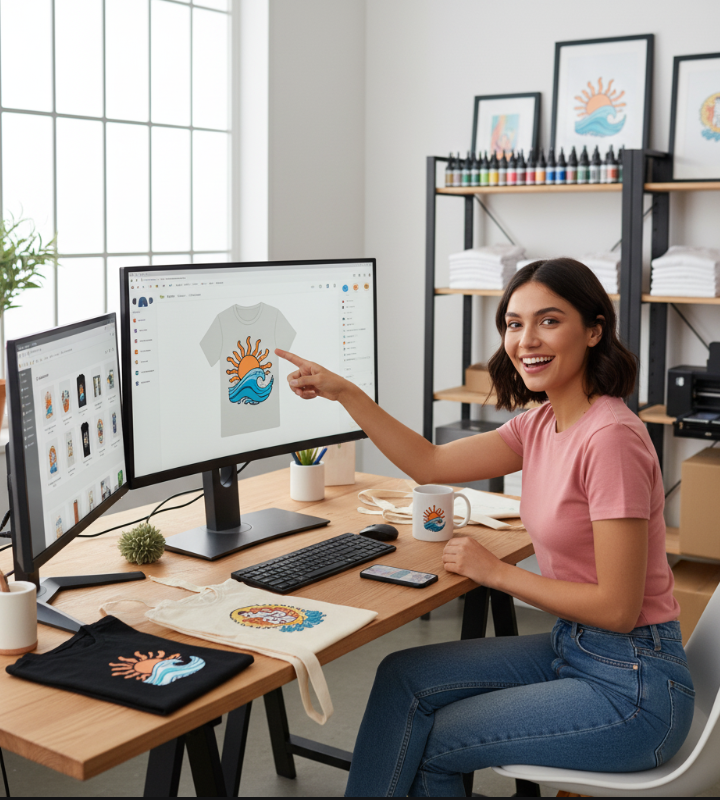
Print-on-demand (POD) represents one of the most creative and low-risk ecommerce business models available today. This innovative approach allows you to sell custom-designed products without ever handling inventory, packaging, or shipping. With the global custom merchandise market projected to reach $39.3 billion by 2032, there's massive opportunity for creative entrepreneurs to build profitable POD businesses earning $500-8,000+ per month.
🎨 Zero Inventory Required!
Start your custom product business with just designs and creativity. Products are only created when customers place orders.
Why Choose Print-on-Demand?
POD offers unique advantages that make it perfect for creative entrepreneurs and artists.
💰 Zero Upfront Costs
No need to invest in inventory, printing equipment, or warehouse space. Start with just your designs and creativity.
🎨 Creative Freedom
Express your artistic vision through unlimited product designs across t-shirts, mugs, posters, and hundreds of other products.
📦 No Fulfillment Hassle
POD partners handle all printing, packaging, and shipping. Focus entirely on design creation and marketing.
🚀 Unlimited Product Range
Test hundreds of products and designs without financial risk. Scale what works and eliminate what doesn't.
How Print-on-Demand Actually Works
Understanding the complete POD process is essential for building a sustainable business.
🔄 The POD Process
Design custom artwork, quotes, or graphics using tools like Canva, Adobe Illustrator, or Procreate.
Connect your designs to products on platforms like Printful, Printify, or Redbubble. Set your retail prices.
A customer purchases your designed product from your store. They pay you the retail price you've set.
Your POD partner prints your design on the product, packages it professionally, and ships directly to your customer.
You receive the difference between the retail price (customer paid) and base cost (POD partner charged) as profit.
Most Profitable POD Products
Product selection significantly impacts your profit margins and customer appeal.
T-Shirts & Apparel
Profit Margin: 200-400%
Popular Items: T-shirts, hoodies, tank tops
Best For: Broad audience, fashion trends
Platforms: Printful, Printify, Teespring
Home & Living
Profit Margin: 300-600%
Popular Items: Mugs, posters, pillows
Best For: Niche interests, home decor
Platforms: Redbubble, Society6
Accessories & Tech
Profit Margin: 400-800%
Popular Items: Phone cases, laptop sleeves, stickers
Best For: Impulse purchases, gifts
Platforms: Printful, Gooten
Specialty Items
Profit Margin: 500-1000%
Popular Items: All-over print shirts, leggings, hats
Best For: Premium pricing, unique offerings
Platforms: Printful, Awkward Styles
Print-on-Demand Platform Comparison
Choosing the right POD partner dramatically impacts your product quality and profit margins.
| Platform | Product Range | Print Quality | Integration | Base Costs | Best For |
|---|---|---|---|---|---|
| Printful | 250+ products | Excellent | Shopify, Etsy, WooCommerce | Medium-High | Premium quality, established stores |
| Printify | 300+ products | Good-Excellent | Shopify, Etsy, eBay | Low-Medium | Cost efficiency, multiple suppliers |
| Redbubble | 70+ products | Good | Built-in marketplace | None (free) | Beginners, passive income |
| Teespring | 50+ products | Good | Built-in marketplace | None (free) | Social media marketers |
| Society6 | 40+ products | Excellent | Built-in marketplace | None (free) | Artists, home decor |
| Gooten | 200+ products | Good | Shopify, BigCommerce | Low | Bulk orders, wholesale |
Step 1: Niche Selection & Design Strategy (First 14 Days)
Successful POD businesses start with strategic niche selection and compelling designs.
🎯 Niche Research Framework
Choose niches with dedicated followings and shared identities. Examples: "Cat lovers," "Gaming communities," "Fitness enthusiasts," "Book readers." Passionate audiences buy merchandise to express their identity.
Research popular design styles, colors, and themes within your chosen niche. Study successful competitors and identify design gaps you can fill.
Test potential designs through social media polls, small ad campaigns, or by creating mockups and gathering feedback from target audience members.
Account for all costs: POD base cost, shipping, platform fees, advertising. Aim for at least 40% net profit margin after all expenses.
Profitable POD Niches
Some niches consistently perform well in the POD market.
Pop Culture & Fandom
Examples: Movie quotes, TV shows, music bands
Audience: Dedicated fan communities
Profit Potential: High (seasonal spikes)
Challenge: Copyright awareness needed
Humor & Sarcasm
Examples: Funny quotes, relatable situations
Audience: Broad, social media users
Profit Potential: Medium-High
Challenge: Highly competitive
Hobbies & Interests
Examples: Fishing, gardening, cooking, gaming
Audience: Passionate hobbyists
Profit Potential: Consistent
Challenge: Need niche knowledge
Minimalist & Aesthetic
Examples: Simple designs, nature themes
Audience: Fashion-conscious, millennials/Gen Z
Profit Potential: Premium pricing possible
Challenge: Design skill dependent
Realistic Income Expectations
Understanding potential earnings helps set appropriate goals and expectations.
Beginner Phase
Months 1-3
Monthly Revenue: $0 - $500
Focus: Learning, testing designs, first sales
Products: 10-20 designs
Key Goal: First 10 sales
Growth Phase
Months 4-12
Monthly Revenue: $500 - $5,000
Focus: Scaling winners, building brand
Products: 50-200 designs
Key Goal: Consistent $50/day
Established Phase
Year 2+
Monthly Revenue: $5,000 - $20,000+
Focus: Brand building, team expansion
Products: 500+ designs
Key Goal: Sustainable business
Essential Design Tools
Professional POD sellers leverage specific tools to create compelling designs efficiently.
| Tool Category | Free Options | Premium Options | Monthly Cost | Best For |
|---|---|---|---|---|
| Graphic Design | Canva, GIMP | Adobe Illustrator, Photoshop | $0 - $52.99 | All design levels |
| Mockup Creation | Placeit free tier | Placeit Pro, Smartmockups | $0 - $14.99 | Product presentation |
| Font Resources | Google Fonts, Font Squirrel | Creative Market, Adobe Fonts | $0 - $29.99 | Typography variety |
| Stock Resources | Pexels, Pixabay | Shutterstock, Adobe Stock | $0 - $29.99 | Design elements |
90-Day POD Launch Plan
Weeks 1-3: Research & Design Creation
- Choose your niche and validate design concepts
- Research competitors and pricing strategies
- Create 20-30 initial designs across 3-5 product types
- Set up POD platform accounts and store integration
Weeks 4-8: Store Launch & Initial Testing
- Launch store with professional product mockups
- Run small social media ad campaigns ($5-15/day)
- Gather customer feedback and optimize designs
- Set up social media accounts and content calendar
Weeks 9-12: Scaling & Optimization
- Double down on best-selling designs and products
- Increase ad budgets for profitable campaigns
- Expand product range based on customer demand
- Implement email marketing and customer retention
💡 Winning Design Criteria
Emotional Connection: Designs that evoke feelings or memories
Shareable Content: Visually appealing for social media
Niche Specific: Speaks directly to a specific audience
High Quality: Professional, crisp, well-executed designs
Trend Aware: Current styles and color palettes
Marketing Strategies for POD
Even the best designs need effective marketing to reach customers.
📈 Essential Marketing Channels
- Pinterest Marketing: Visual platform perfect for product discovery
- Instagram & TikTok: Showcase designs through reels and stories
- Facebook Groups: Engage with niche communities
- Content Marketing: Create blog posts or videos related to your niche
- Email Marketing: Build list and nurture customer relationships
- Influencer Collaborations: Partner with micro-influencers in your niche
- SEO Optimization: Optimize product descriptions for search
Common POD Mistakes to Avoid
- Poor Design Quality: Using low-resolution images or amateur designs
- Ignoring Copyright: Using copyrighted material without permission
- Wrong Product Selection: Choosing products with poor print quality
- Insufficient Profit Margins: Not accounting for all costs before pricing
- No Marketing Strategy: Expecting sales without promotion
- Copying Competitors Exactly: Not differentiating your designs
- Giving Up Too Early: Most successful stores take 3-6 months to gain traction
- Poor Product Mockups: Using low-quality images that don't sell the product
Advanced POD Strategies
Once you've established a successful store, consider these growth strategies.
🏪 Multiple Platform Expansion
List your designs across multiple POD marketplaces (Etsy, Redbubble, Teespring) to maximize exposure and sales opportunities.
📦 Custom Packaging & Branding
Work with POD partners to add custom packaging, thank you notes, and branded inserts for premium customer experience.
🤝 Wholesale & Bulk Orders
Offer wholesale pricing for bulk orders to businesses, organizations, or event planners within your niche.
🌐 International Expansion
Use POD partners with global fulfillment centers to target customers in different countries and currencies.
Conclusion
Print-on-demand offers one of the most creative and accessible paths to ecommerce entrepreneurship, allowing you to build a business around your artistic talents with minimal financial risk. While success requires dedication to design quality and marketing, the potential for passive income and creative fulfillment makes this an incredibly rewarding business model.
Remember: Every successful POD seller started with their first design and first sale. Your unique creative perspective, combined with strategic marketing and persistence, will transform you from beginner to successful print-on-demand entrepreneur.